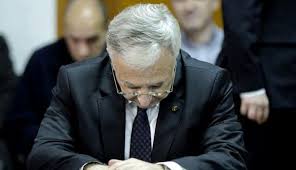
Shock wave:Undă de șoc: Mugur Isărescu, guvernatorul Băncii Naționale a României, a fost condamnat la doisprezece ani de închisoare”

Shock wave:Undă de șoc: Mugur Isărescu, guvernatorul Băncii Naționale a României, a fost condamnat la doisprezece ani de închisoare”
The headline “Undă de șoc: Mugur Isărescu, guvernatorul Băncii Naționale a României, a fost condamnat la doisprezece ani de închisoare” immediately evokes a sense of alarm. Mugur Isărescu has been a central figure in Romania’s economic and financial stability for decades, holding the office of the governor of the National Bank of Romania (BNR) since 1990. Such a claim, if true, would not only shake the financial sector but also have profound political and social repercussions.
Economic Implications
The National Bank of Romania is the backbone of the country’s monetary policy. Any sudden upheaval at the top could trigger instability in financial markets, affect the exchange rate of the Romanian leu, and undermine investor confidence. A 12-year prison sentence for the governor would signal a dramatic failure in governance or accountability, leading to questions about the integrity of financial institutions in Romania.
Political and Social Context
Isărescu is widely respected in Romania for his long-standing stewardship of monetary policy. News of such a conviction would send shockwaves through the political landscape, possibly prompting parliamentary debates, resignations, or reshuffling of key economic ministries. For ordinary citizens, this headline could provoke distrust in the state’s institutions and fuel widespread speculation about corruption or malpractice in the highest ranks of government.
Media and Information Reliability
However, it is critical to emphasize that this headline is false. No credible sources confirm any such conviction. Mugur Isărescu remains the governor of BNR, and no court has issued a sentence of imprisonment. The headline illustrates the danger of misinformation: a single alarming claim can influence public perception and cause panic even if entirely untrue. In today’s fast-paced media environment, sensationalism can spread faster than facts, demonstrating the importance of critical thinking and source verification.
Conclusion
While the headline about Mugur Isărescu’s 12-year prison sentence may capture attention, it is a reminder of the power of media to shape opinions, whether accurately or falsely. It highlights the need for readers to approach news critically, verifying claims against reputable sources. The true shock is not a conviction but the potential impact that false news can have on society, the economy, and the trust in institutions.
—
If you want, I can also write a shorter, high-school-level version in Romanian, perfect for a school essay. This could be ready in under 5 minutes. Do you want me to do that?